
Stem Cell Research: Shinya Yamanaka's Groundbreaking Discovery
- Tommy Aleksander Karlsen
- Dec 2, 2023
- 3 min read

Updated: Mar 29, 2024
Few discoveries in the 21st century have been as transformative as the breakthrough made by Dr. Shinya Yamanaka and his team in 2006. Their work on induced pluripotent stem cells (iPSCs) has reshaped our understanding of cellular biology and holds immense promise for regenerative medicine, drug development, and understanding human development.
The Context: Stem Cells and Their Potential
Stem cells, characterized by their ability to differentiate into various cell types and self-renew, have long been seen as a potential tool for treating a range of diseases. Embryonic stem cells (ESCs), in particular, are pluripotent, meaning they can become any cell type in the body. However, the use of ESCs raised ethical concerns, as their extraction involves the destruction of embryos.
Yamanaka's Vision
Dr. Shinya Yamanaka, a Japanese physician-scientist, recognized the therapeutic potential of stem cells but was also acutely aware of the ethical dilemmas surrounding ESCs. This prompted him to search for a method to generate pluripotent stem cells without using embryos.
The Breakthrough: Induced Pluripotent Stem Cells (iPSCs)
In 2006, Yamanaka and his team at Kyoto University made a groundbreaking announcement:
Reprogramming Cells: Yamanaka's team demonstrated that by introducing a specific set of four genes (often referred to as the Yamanaka factors: Oct3/4, Sox2, c-Myc, and Klf4) into adult mouse fibroblast cells, they could revert these mature cells back to a pluripotent state, similar to embryonic stem cells. These reprogrammed cells were termed "induced pluripotent stem cells" or iPSCs.
Ethical Advantages: Since iPSCs can be generated from adult cells, such as skin or blood cells, they bypass the ethical concerns associated with embryonic stem cells.
Implications and Impact
Yamanaka's discovery had profound implications:
Regenerative Medicine: iPSCs opened the door to creating patient-specific stem cells, which could potentially be used to repair damaged tissues or organs without the risk of immune rejection.
Disease Modeling: Scientists can now create iPSCs from patients with specific diseases, differentiate them into relevant cell types, and study the cellular mechanisms of these diseases in the lab.
Drug Development: iPSC-derived cells offer a platform for testing drug efficacy and safety, accelerating the drug development process.
Recognition and Legacy
The significance of Yamanaka's work was widely recognized:
Nobel Prize: In 2012, just six years after his seminal paper, Shinya Yamanaka was awarded the Nobel Prize in Physiology or Medicine, which he shared with Sir John B. Gurdon, who had conducted pioneering work on cell reprogramming in frogs in the 1960s.
Global Research: Yamanaka's methodology has been adopted and refined by labs worldwide, leading to a surge in stem cell research and its applications.
Summary
Dr. Shinya Yamanaka's discovery of iPSCs in 2006 marked a paradigm shift in stem cell research, melding the fields of developmental biology and regenerative medicine. As we continue to explore the potential of iPSCs, Yamanaka's vision and perseverance serve as a beacon for the transformative power of scientific inquiry.
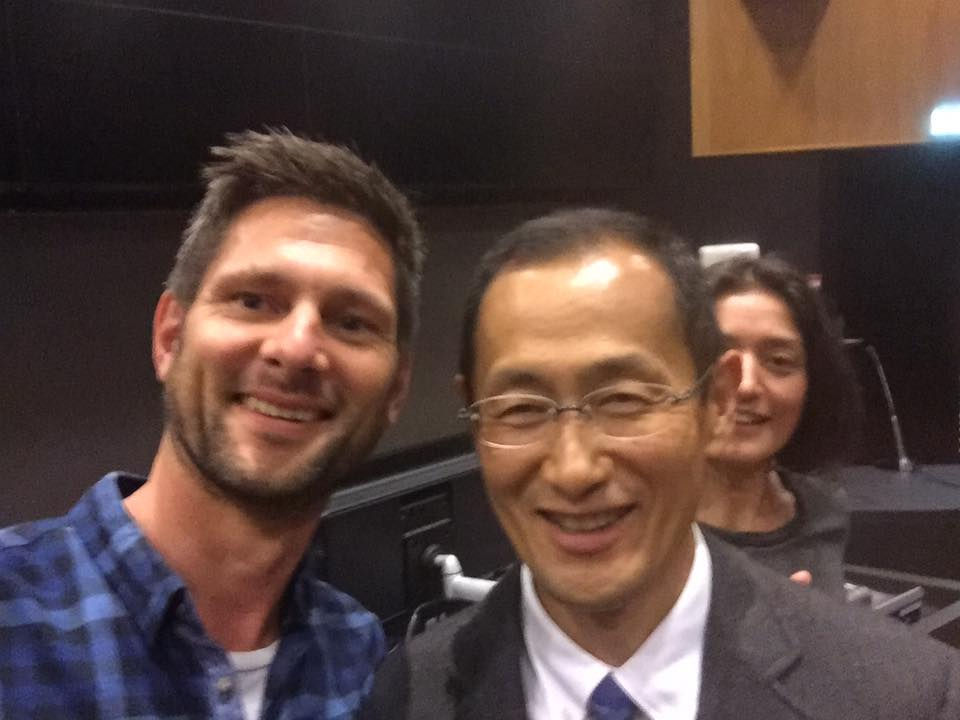
This is Shinya Yamanaka (right) and me (left) at the Nobel event at University of Oslo, Norway in 2017. Shinya Yamanaka gave a lecture about the new era of medicine with induced pluripotent stem cells, followed by moderating a roundtable discussion. He also shared a lunch with selected students and researchers at the University of Oslo. Photo by me (selfie)


Comments