
Nvidia's Impact on Biomedicine and Genomics
- Mar 30, 2024
- 3 min read
Nvidia, best known for its graphics processing units (GPUs), is making significant strides in biomedicine and genomics. While its roots are in gaming and artificial intelligence, Nvidia is leveraging its computational prowess to drive advancements in healthcare and biological research.
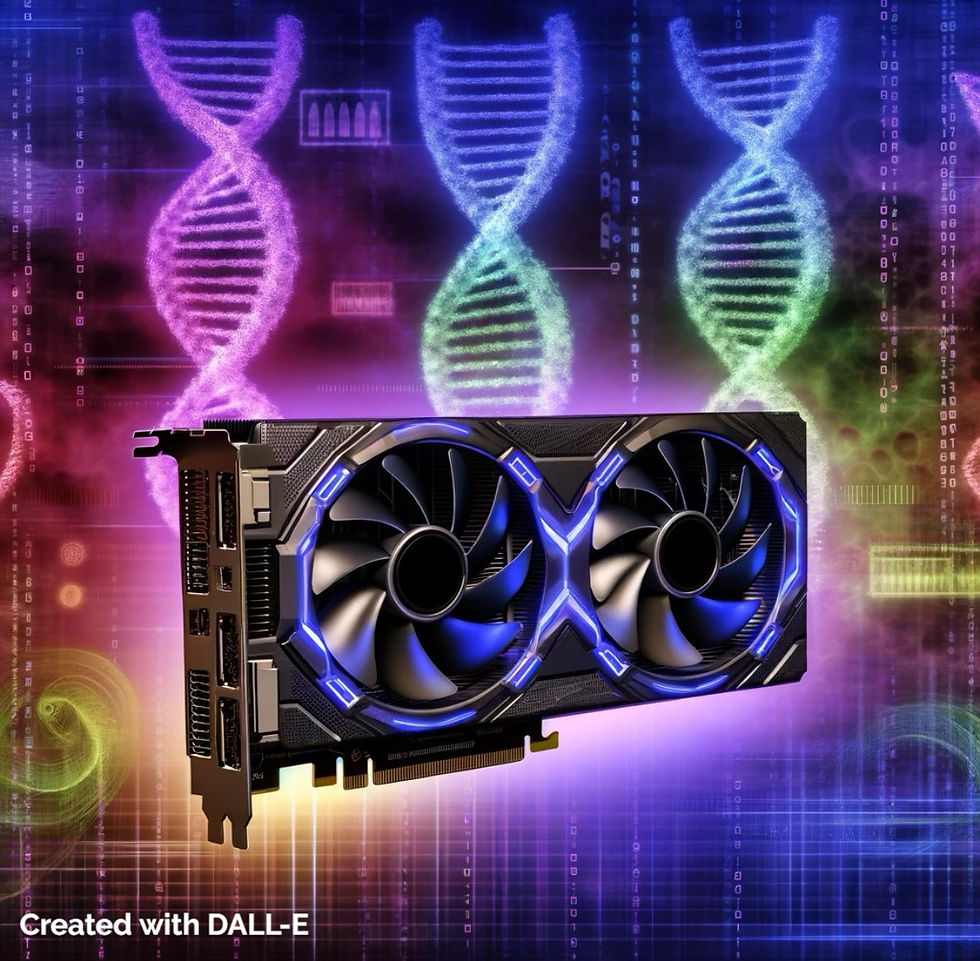
Revolutionizing Biomedical Research with GPU Technology
Nvidia’s GPUs are becoming instrumental in biomedical research, characterized by enormous datasets. These GPUs’ capacity to process extensive data swiftly is revolutionizing data analysis within the sector. For instance, in drug discovery, Nvidia's GPUs accelerate the screening of molecular compounds, greatly enhancing the pace of identifying potential drugs (1). In cancer research, these GPUs help analyze genetic sequences and simulate drug interactions at an unprecedented speed, offering new avenues for understanding and treating various cancer types. Additionally, Nvidia’s technology is also gaining traction in medical imaging and device development, providing the backbone for complex image processing tasks necessary in developing cutting-edge diagnostic tools (2).
The Role of Nvidia in Genomic Sequencing
Genomic sequencing, crucial in the push towards personalized medicine, requires substantial computational resources for processing vast genetic data. Nvidia is playing a transformative role in this field with its advanced GPU technology.
Nvidia's GPUs are used to accelerate the analysis of genomic sequencing data. This involves decoding the vast and complex genetic information found in DNA, a task that traditionally requires extensive time and computational power. With Nvidia’s GPUs, the time taken for sequencing entire genomes is significantly reduced, enabling researchers and clinicians to quickly identify genetic markers associated with specific diseases (3).
The impact of this acceleration is profound in areas such as cancer treatment, where understanding a patient’s genetic makeup can influence the course of therapy. For example, in oncology, rapid genomic sequencing allows for the identification of specific mutations that may respond to targeted treatments, enabling more personalized and effective cancer care.
Furthermore, Nvidia's technology facilitates large-scale genomic studies, crucial for understanding complex genetic diseases. By enabling faster processing of genetic data, researchers can conduct comprehensive analyses that were previously impractical due to time constraints. This accelerates the discovery of genetic links to diseases and the development of corresponding treatments.
In addition to disease treatment and research, Nvidia’s contributions to genomic sequencing are also shaping preventive health care. By making genomic sequencing more accessible and faster, it's becoming possible to incorporate genetic risk analysis into routine medical practice. This leads to early detection of predispositions to certain diseases, allowing for proactive healthcare measures.
The integration of Nvidia’s GPUs into genomic sequencing represents a significant leap forward, not only in terms of technological capability but also in how quickly and effectively genetic information can be translated into actionable medical insights.
AI and Machine Learning in Biomedicine
Nvidia's impact in healthcare goes beyond computing power, leading the integration of AI and machine learning. Its GPUs power deep learning platforms that help medical experts analyze data more efficiently, revolutionizing diagnostics and predictive analytics. Machine learning algorithms, for example, are used for predicting patient outcomes, early disease detection, and guiding treatment choices (4). Additionally, Nvidia's AI technology is enhancing medical devices, from smart prosthetics to advanced imaging systems, making them more responsive to patient needs.
Collaborations and Partnerships
Nvidia’s dedication to biomedicine is underscored by its collaborations with various research and healthcare organizations. These partnerships aim to develop AI-driven healthcare solutions, enhancing diagnostics and drug discovery processes. This collaborative approach is pivotal in bridging the gap between technology and healthcare, sparking innovations that may transform patient care (5).
Challenges and the Road Ahead
While Nvidia’s integration into biomedicine offers many opportunities, it also presents challenges. Data privacy, ethical AI use, and the necessity of interpretable AI models are critical concerns. Furthermore, the clinical adoption of these technologies entails navigating regulatory landscapes and integrating them into existing healthcare systems (6).
Summary
Nvidia's entry into biomedicine and genomics marks a significant milestone in healthcare technology. Its GPUs and AI platforms are not just accelerating research but are also opening new avenues in personalized medicine and patient care. As Nvidia continues to innovate in AI and computing, its influence on healthcare promises to be profound, heralding a new era of technology-driven biology.
References and further reading


Comments