
Some of The Most Bizarre Medical Practices in History
- Tommy Aleksander Karlsen
- Mar 12, 2024
- 3 min read

Updated: Mar 29, 2024
Medical history is filled with practices that seem bizarre, ineffective, and often dangerous from a modern perspective. Today, we look briefly into some of these historical medical oddities.
1. Trepanation: Drilling Holes in the Head
One of the oldest and most startling surgical practices is trepanation - drilling or scraping a hole into the skull. Dating back over 7,000 years, it was believed to treat health problems stemming from head injuries and, surprisingly, mental disorders. Evidence of trepanation has been found all around the world, from ancient Peru to medieval Europe (1).
2. Bloodletting: A Universal Cure
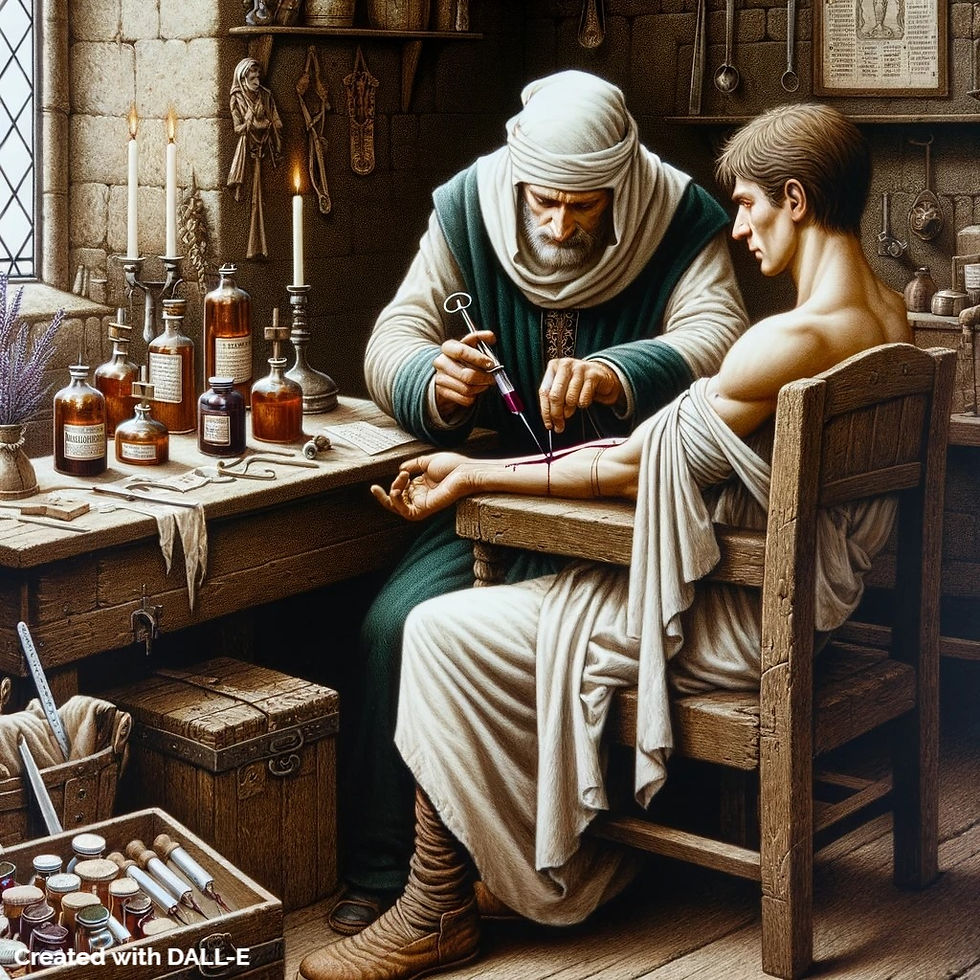
Bloodletting, the practice of withdrawing blood to cure or prevent illness and disease, was based on an ancient system of medicine in which blood and other bodily fluids were considered to have certain properties. It reached its peak in the 19th century but was recommended for an astonishing array of conditions, from acne to cancer, without any real evidence of its effectiveness (2).
3. Mummy Powder: The Cure-All
In medieval Europe, "mummy powder," made from ground-up mummies imported from Egypt, was considered a potent medicine. It was used to treat everything from headaches to stomach ulcers, based on the belief that the preservation qualities of mummification would transfer to the patient (3).
4. Lobotomy: The Controversial Brain Surgery
Lobotomy, a type of brain surgery, involved cutting numerous connections to and from the brain's prefrontal cortex. It became popular in the early 20th century to treat mental illness but often resulted in patients' significant cognitive and personality changes (4).
5. Mercury Treatments: A Toxic Solution
Mercury was once used to treat a range of ailments, most notoriously syphilis. The toxic effects of mercury were not well understood, and it was believed to cure various diseases. The phrase "mad as a hatter" originates from the neurological damage caused by mercury exposure among hat makers, who used it in the manufacturing process (5).
6. Animal Dung Ointments: Unsanitary Solutions In ancient times, animal dung was used in medicine due to its supposed therapeutic properties. For example, crocodile dung was used as a form of contraception in ancient Egypt, and other animal excrements were used to treat wounds and other ailments (6).
These historical medical practices highlights the evolution of medical understanding and the sometimes-dangerous lengths humans will go to find cures. Each practice, no matter how bizarre it appears today, represents a step on the path to modern medicine. As we continue to advance in medical science, who knows what practices of today will seem strange to future generations? These bizarre practices underscore the importance of scientific rigor and ethical considerations in medical treatment, ensuring that future medical advancements are both effective and safe.
References and further reading
Trepanation: "Holes in the Head: The Art and Archaeology of Trepanation in Ancient Peru", offers insights into this ancient practice.
Bloodletting: "A Brief History of Bloodletting " by Timothy M- Bell explores the historical evolution of bloodletting.
Mummy Powder: The practice of using mummy powder in medieval medicine is documented in "The Mummy Congress: Science, Obsession, and the Everlasting Dead" by Heather Pringle. This book delves into various uses of mummies in history, including their role in medicine.
Lobotomy: "Great and Desperate Cures: The Rise and Decline of Psychosurgery and Other Radical Treatments for Mental Illness" by Elliot S. Valenstein, Ph.D., provides a detailed account of the rise and fall of lobotomy as a treatment for mental illness.
Mercury Treatments: "Syphilis and the use of mercury" in the "The Pharmaceutical Journal" covers the use of mercury in treating syphilis.
Animal Dung Ointments: "Mud, Muck, and Dead Things: The Realities of Medieval Medicine" by Dr. Katharine Park, featured in the "British Library’s Medieval Manuscripts Blog," discusses the use of animal dung in treatments.


Comments